News
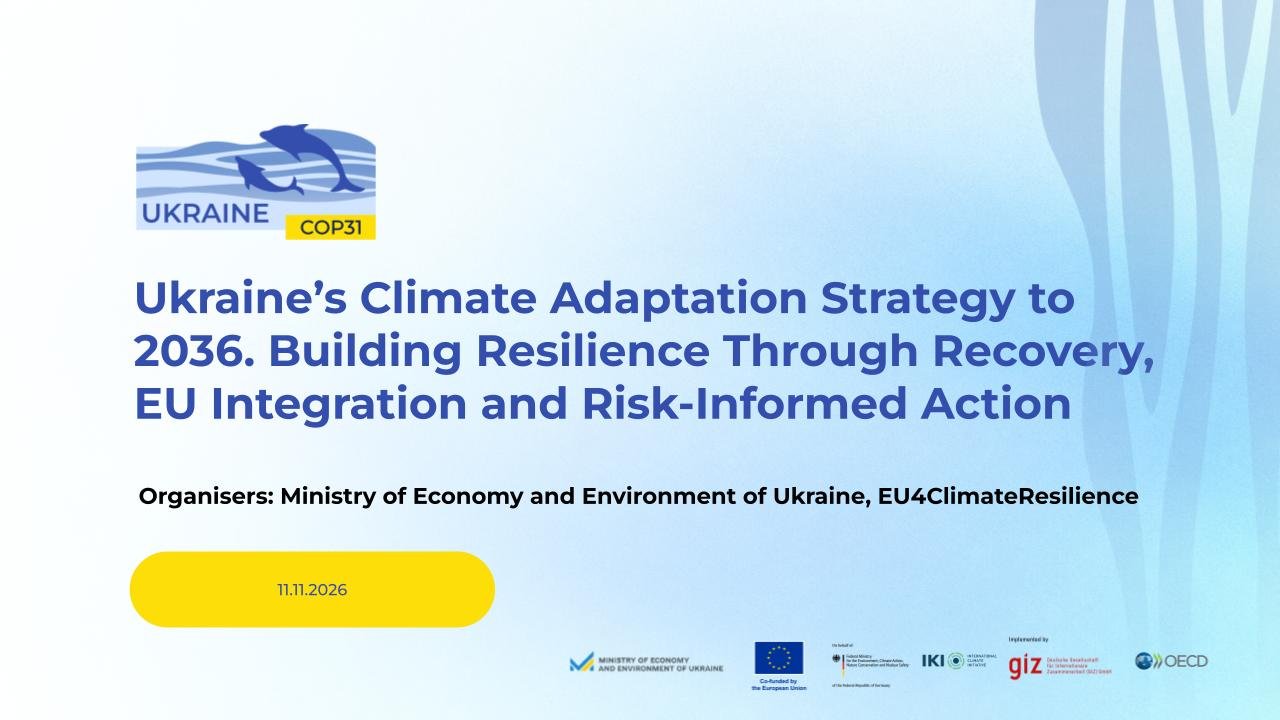
Ukraine presents its draft Climate Adaptation Strategy to 2036 at COP31
On 11 November 2026, the Ukrainian Pavilion at COP31 hosted a discussion presenting Ukraine’s draft Climate Change Adaptation Strategy to 2036. The event brought together representatives of the Ukrainian Government, international partners and experts to discuss how Ukraine can strengthen its resilience to growing climate risks amid the challenges of war, recovery and EU integration.
The draft Strategy establishes a long-term framework for integrating climate adaptation into sectoral policies, recovery and reconstruction planning, and decision-making at national, regional and local levels. It also provides a basis for strengthening institutional coordination and translating climate risk assessments into practical adaptation measures.
During the high-level discussion, Oleksandr Krasnolutskyi, Deputy Minister of Economy and Environment of Ukraine, emphasised that the Strategy should be an actionable framework, with green reconstruction among its key priorities. He also highlighted the importance of continued support from international partners and the EU for its effective implementation.
International speakers shared experiences and approaches to strengthening climate resilience. Laura Lindgren, Director at the Ministry for Foreign Affairs of Finland, highlighted the importance of integrating climate risk management into the regular responsibilities and planning processes of sectoral ministries and public authorities. Mathilde Mesnard, Deputy Director of the OECD Environment Directorate, stressed the need to shift from responding to disasters towards preventing them, noting that investing in prevention can reduce future climate-related losses and reconstruction costs.
The sectoral discussion, introduced by Yevheniia Zasiadko, Climate Change Adviser at EU4ClimateResilience, focused on practical adaptation priorities in agriculture, forests and ecosystems, early warning systems, and climate-resilient recovery and reconstruction. Drawing on the experience of developing the Strategy, she emphasised that climate adaptation is not only a long-term policy objective but an essential part of Ukraine’s resilience today. Reconstruction and economic development are already underway, making it crucial to integrate climate considerations into decisions being taken now.
EU4ClimateResilience played the leading coordinating role in the development of the draft Strategy and Operational plan for next 3 years, working in close cooperation with the Ministry of Economy and Environment of Ukraine. The project coordinated the development process and provided substantive and technical support, bringing together sectoral expertise, international experience and practical lessons from climate adaptation planning at national, regional and local levels. The development of the Strategy was supported by contributions from various stakeholders, including the Recovery and Reform Support Team (RST) under Ministry of economy and Environment and the Ukrainian Climate Office, working alongside the EU4ClimateResilience project
The next step is to translate the Strategy's priorities into action through implementation across sectors and levels of governance, ensuring that Ukraine's recovery builds long-term resilience to climate change.
The event was supported by the Ministry of Economy and Environment of Ukraine and the EU4ClimateResilience project, co-funded by the European Union and the German Federal Ministry for the Environment, Climate Action, Nature Conservation and Nuclear Safety (BMUKN), and implemented by GIZ and the OECD.
Other news

EU4ClimateResilience shares local approaches to water security at COP31
On 12 November 2026, EU4ClimateResilience and EU-funded programme EU4Green Recovery East jointly organised the virtual side event “Water Security in a Changing Climate – Challenges in Eastern Partnership Countries” at the OECD COP31 Virtual Pavilion. The discussion focusded on climate pressures on water resources, national responses and practical adaptation measures. EU4ClimateResilience shared

“Our Water, Our Environment” Photography Exhibition Highlights Community-Led Climate Resilience at COP17
As part of the EU4ClimateResilience project, the documentary photography exhibition “Our Water, Our Environment” was presented at the European Union Pavilion in the UN CBD COP17 Green Zone, highlighting the Climate Bridge project and the voices of the Tashir community in Armenia. Through photographs and personal stories, visitors discovered Tashir’s landscapes, the lives of local residents and
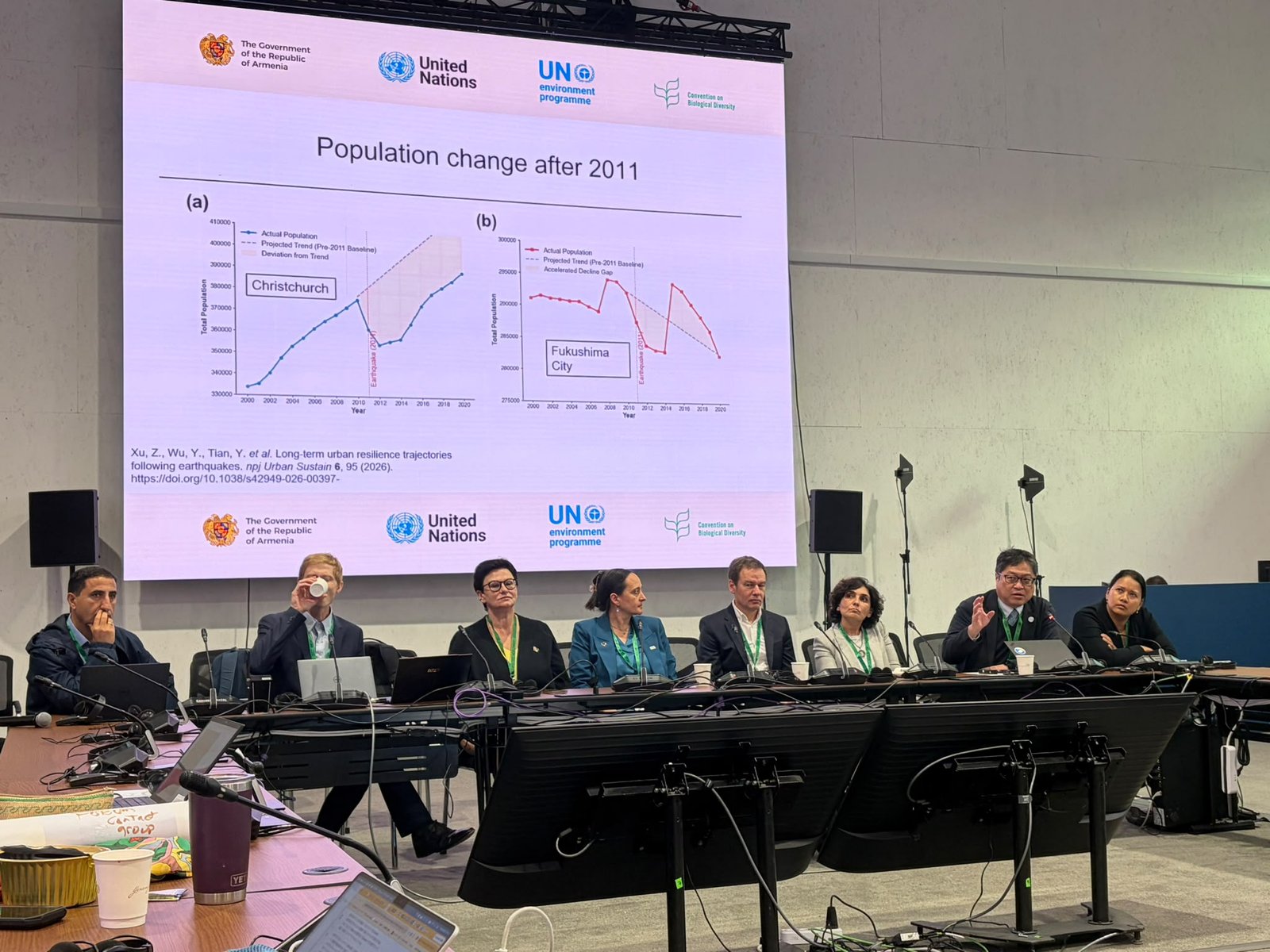
GIZ Shares Armenia’s Experience in Nature-Based Solutions for Resilient Cities at COP17
Within the framework of the 7th Science-Policy Forum for Biodiversity, organised as part of the 17th Conference of the Parties to the Convention on Biological Diversity (COP17), GIZ Armenia contributed to the international session “Nature-Based Recovery for Resilient Cities: Biodiversity, Civic Ecology and Response Diversity in Times of Crisis.” The session, led by the University of Tokyo and c
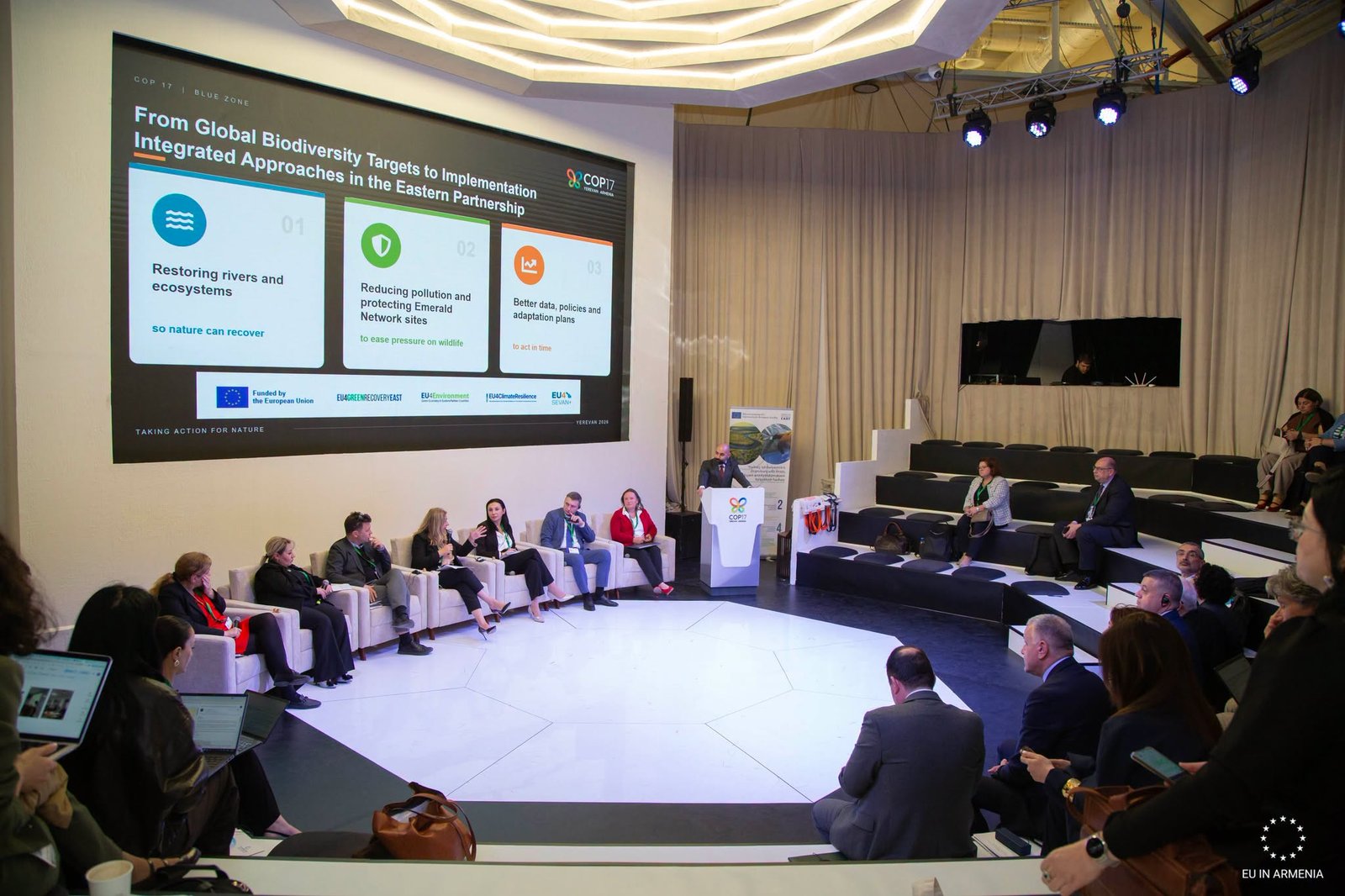
EU4ClimateResilience Joins COP17 Discussion on Biodiversity Protection and Climate Adaptation
On 28 October, the EU4ClimateResilience project joined EU4Green Recovery East, EU4Environment and EU4Sevan+ for a side event at the Armenian Pavilion during COP17 in Yerevan, exploring how global biodiversity targets can be translated into concrete action across Eastern Partnership countries. Jointly organised by the participating projects, the event brought together representatives from Armeni
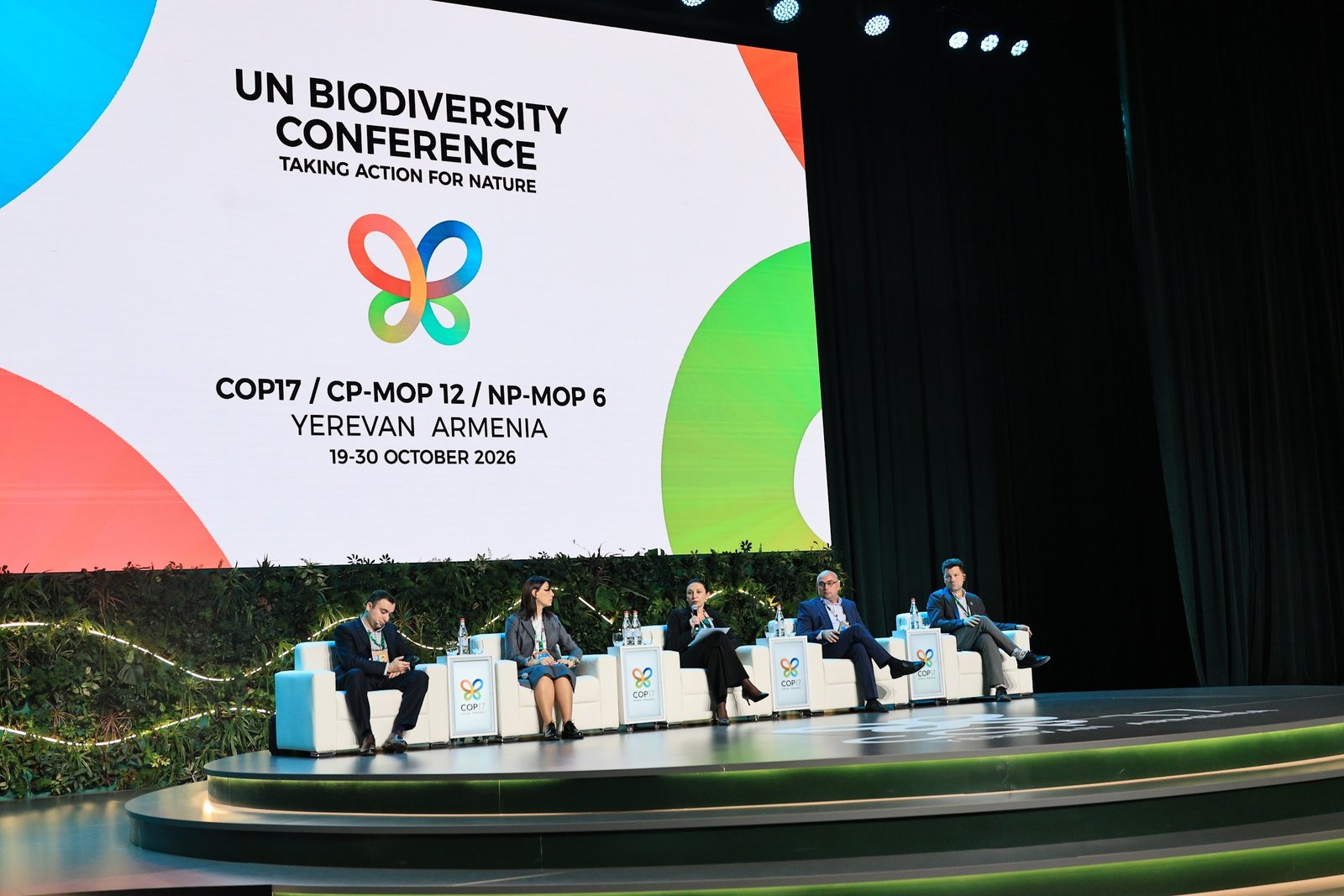
Harnessing the Power of Nature for Climate Resilience: EU4ClimateResilience at COP17 Green Zone
GIZ Armenia, within the framework of the EU4ClimateResilience project, hosted two panel discussions at the COP17 Green Zone under the theme “Operationalizing National Adaptation Plans through Nature-Based Solutions.” Held at the Main Stage of the Karen Demirchyan Sports and Concert Complex in Yerevan, Armenia, the 90-minute session brought together representatives from government institutions,
Implementing Partners:
Deutsche Gesellschaft für Internationale Zusammenarbeit (GIZ) GmbH and the Organisation for Economic Cooperation and Development (OECD)