News

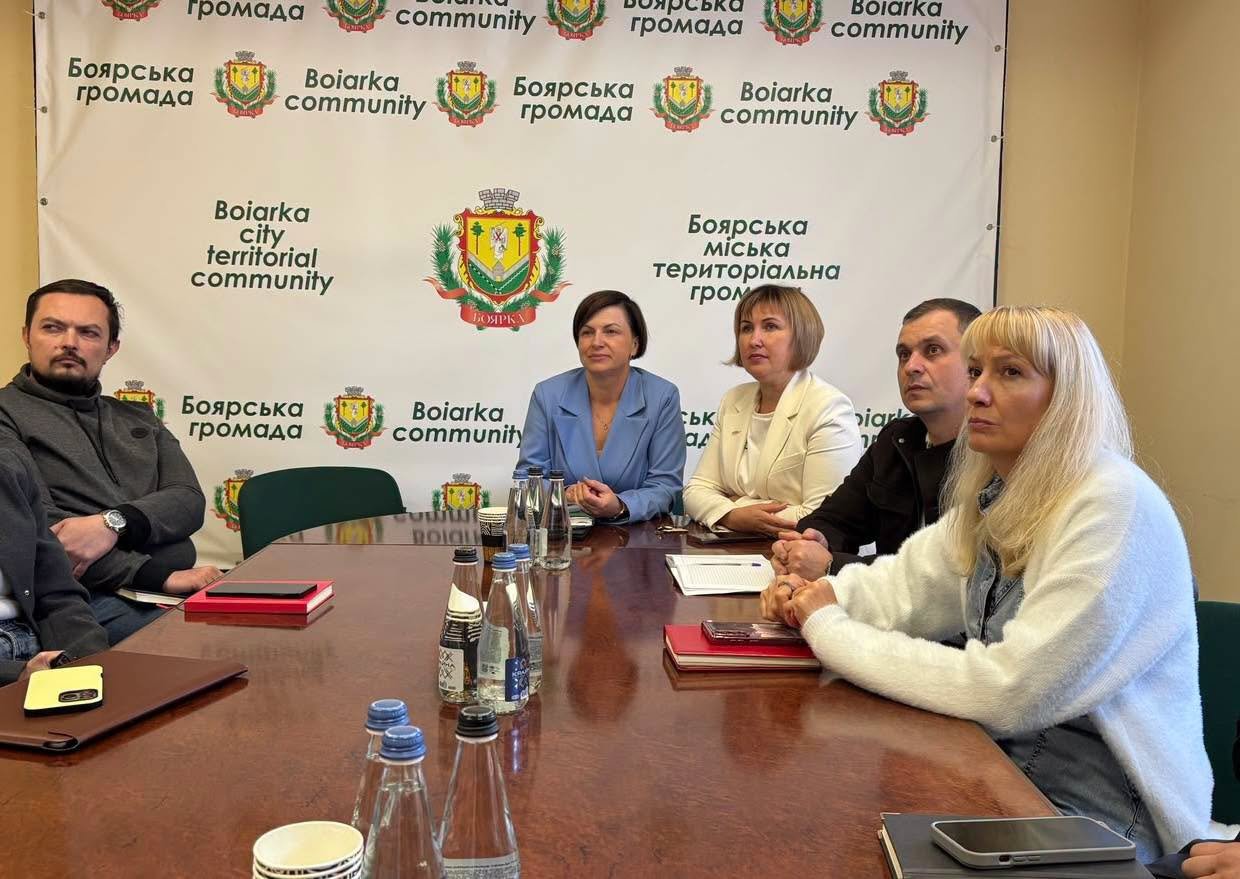
Boiarka Community in Ukraine Hosts Practical Training on Building an Energy Management System
To improve energy efficiency, communities need to understand their own energy consumption. Which buildings consume the most resources? Where do heat losses occur? How can excess consumption be detected in time, and which solutions can be introduced without significant capital investment?
These questions were at the centre of the practical training “Building an Energy Management System: Effective Management of Energy Resources,” held on 1 October 2026 in the Boiarka community, Ukraine.
In her welcoming remarks, Tetiana Kochkova, First Deputy Mayor, emphasised the importance of efficient energy use in the context of current challenges. The training brought together representatives of local executive bodies, facility managers and deputy directors responsible for administrative and maintenance affairs at educational, healthcare and cultural institutions in the Boiarka community.
Nataliia Kholodova, Programme Manager, explained that the training was part of the community's ongoing work to update its Sustainable Energy and Climate Action Plan (SECAP) within the framework of the EU4ClimateResilience project.
The theoretical and practical sessions were delivered by Oleksandr Honcharuk and Oleksandr Sharynskyi, energy managers from the Zhytomyr community, who shared their experience in establishing an energy management system and working with energy consumption data.
The training covered approaches to daily monitoring of energy and water consumption, analysing performance indicators, identifying deviations and determining the causes of excess consumption.
A separate session focused on establishing an energy management system at the community level. Participants discussed the development of regulatory documents, the allocation of responsibilities, staff capacity building and employee incentive mechanisms.
Particular attention was given to making energy management a regular administrative practice, from collecting meter readings and analysing consumption data to making informed decisions. This systematic approach enables communities not only to monitor resource consumption but also to respond promptly to changes and identify facilities requiring additional attention.
The practical session for facility managers and representatives of educational, healthcare and cultural institutions focused on preparing buildings for the heating season and identifying priority measures to reduce energy losses.
Participants explored opportunities to minimise heat losses and adopt practical measures for more efficient resource use. Particular attention was paid to actions that can be implemented without significant capital investment, including timely maintenance, monitoring system performance, detecting faults and analysing actual consumption.
The training also examined the process of conducting an energy audit of a public building, covering the collection of general building information, analysis of structural characteristics, inspection of building systems and the use of measuring equipment. This practical approach helped participants understand which data are needed to assess a building's energy performance and how audit findings can inform future energy efficiency measures.
The updated Sustainable Energy and Climate Action Plan (SECAP) of the Boiarka community is expected to establish priorities for energy efficiency, renewable energy development, climate change adaptation and strengthening energy resilience. It is also intended to serve as a practical tool for developing investment projects and identifying funding opportunities.
The training, organised within the framework of the EU4ClimateResilience project, contributed to strengthening the community's capacity to manage energy resources more efficiently and integrate energy management practices into its daily operations.
Photo source: Boiarka City Council


Other news

EU4ClimateResilience shares local approaches to water security at COP31
On 12 November 2026, EU4ClimateResilience and EU-funded programme EU4Green Recovery East jointly organised the virtual side event “Water Security in a Changing Climate – Challenges in Eastern Partnership Countries” at the OECD COP31 Virtual Pavilion. The discussion focusded on climate pressures on water resources, national responses and practical adaptation measures. EU4ClimateResilience shared
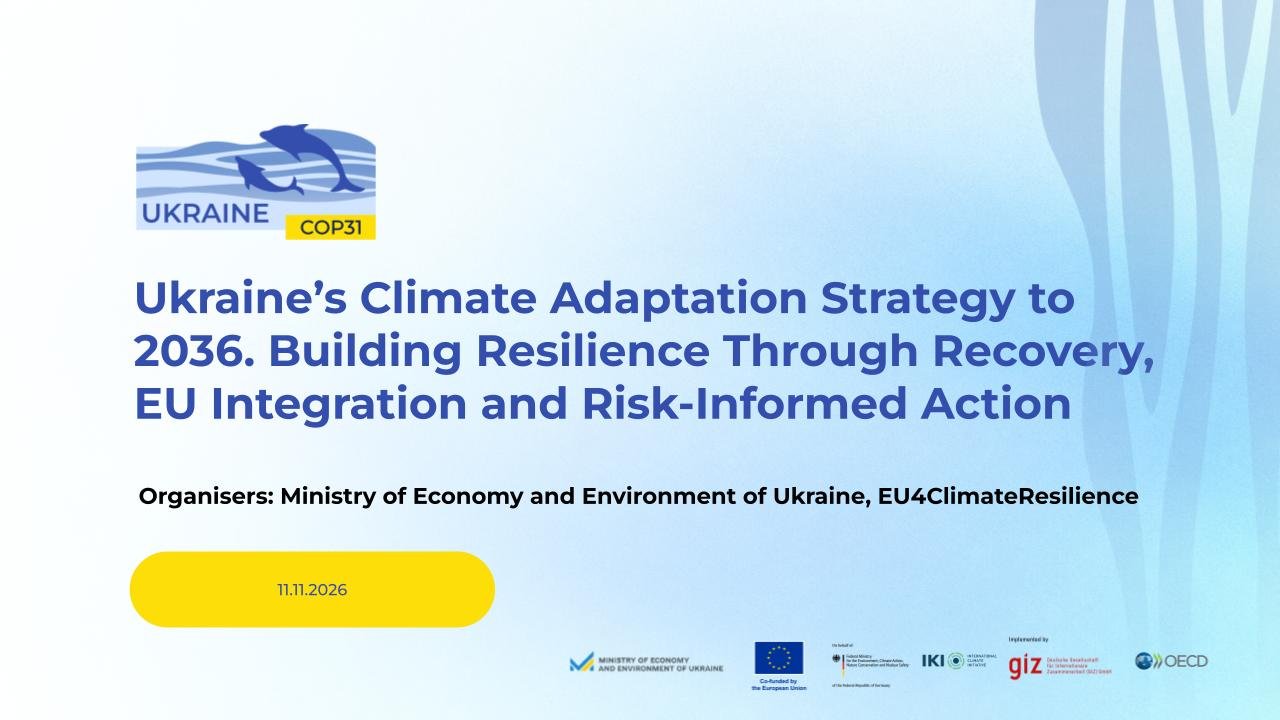
Ukraine presents its draft Climate Adaptation Strategy to 2036 at COP31
On 11 November 2026, the Ukrainian Pavilion at COP31 hosted a discussion presenting Ukraine’s draft Climate Change Adaptation Strategy to 2036. The event brought together representatives of the Ukrainian Government, international partners and experts to discuss how Ukraine can strengthen its resilience to growing climate risks amid the challenges of war, recovery and EU integration. The draft
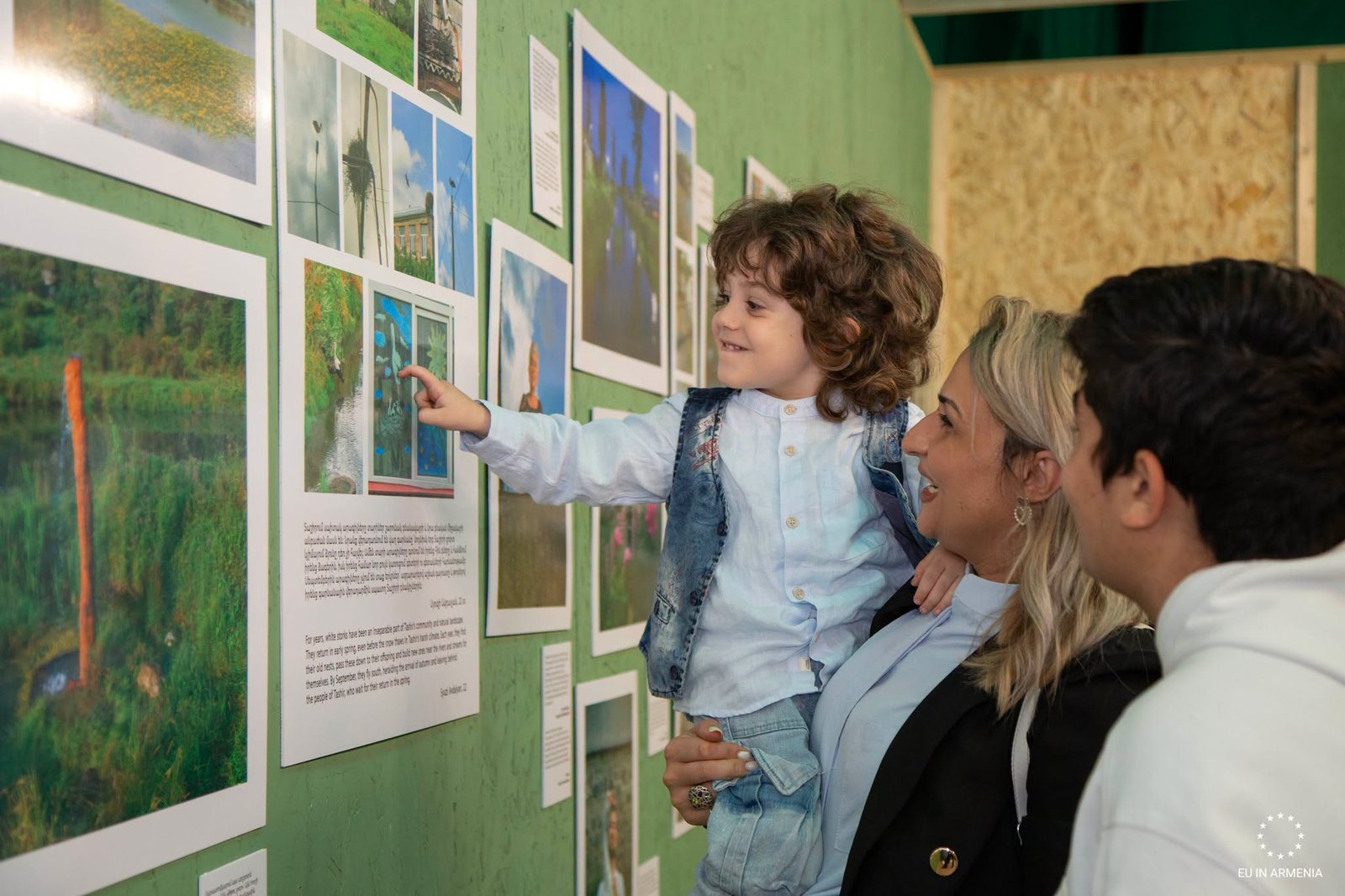
“Our Water, Our Environment” Photography Exhibition Highlights Community-Led Climate Resilience at COP17
As part of the EU4ClimateResilience project, the documentary photography exhibition “Our Water, Our Environment” was presented at the European Union Pavilion in the UN CBD COP17 Green Zone, highlighting the Climate Bridge project and the voices of the Tashir community in Armenia. Through photographs and personal stories, visitors discovered Tashir’s landscapes, the lives of local residents and
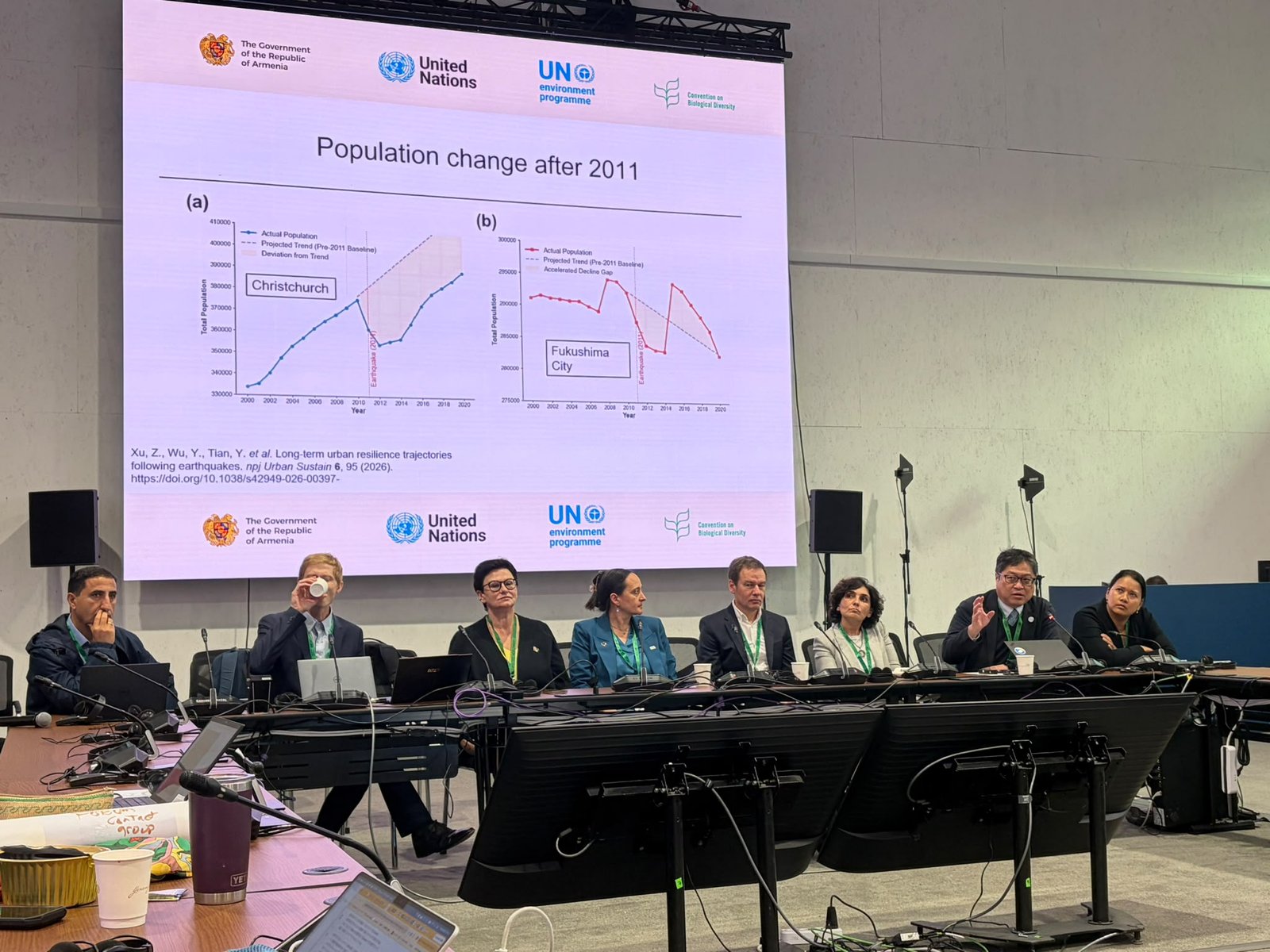
GIZ Shares Armenia’s Experience in Nature-Based Solutions for Resilient Cities at COP17
Within the framework of the 7th Science-Policy Forum for Biodiversity, organised as part of the 17th Conference of the Parties to the Convention on Biological Diversity (COP17), GIZ Armenia contributed to the international session “Nature-Based Recovery for Resilient Cities: Biodiversity, Civic Ecology and Response Diversity in Times of Crisis.” The session, led by the University of Tokyo and c
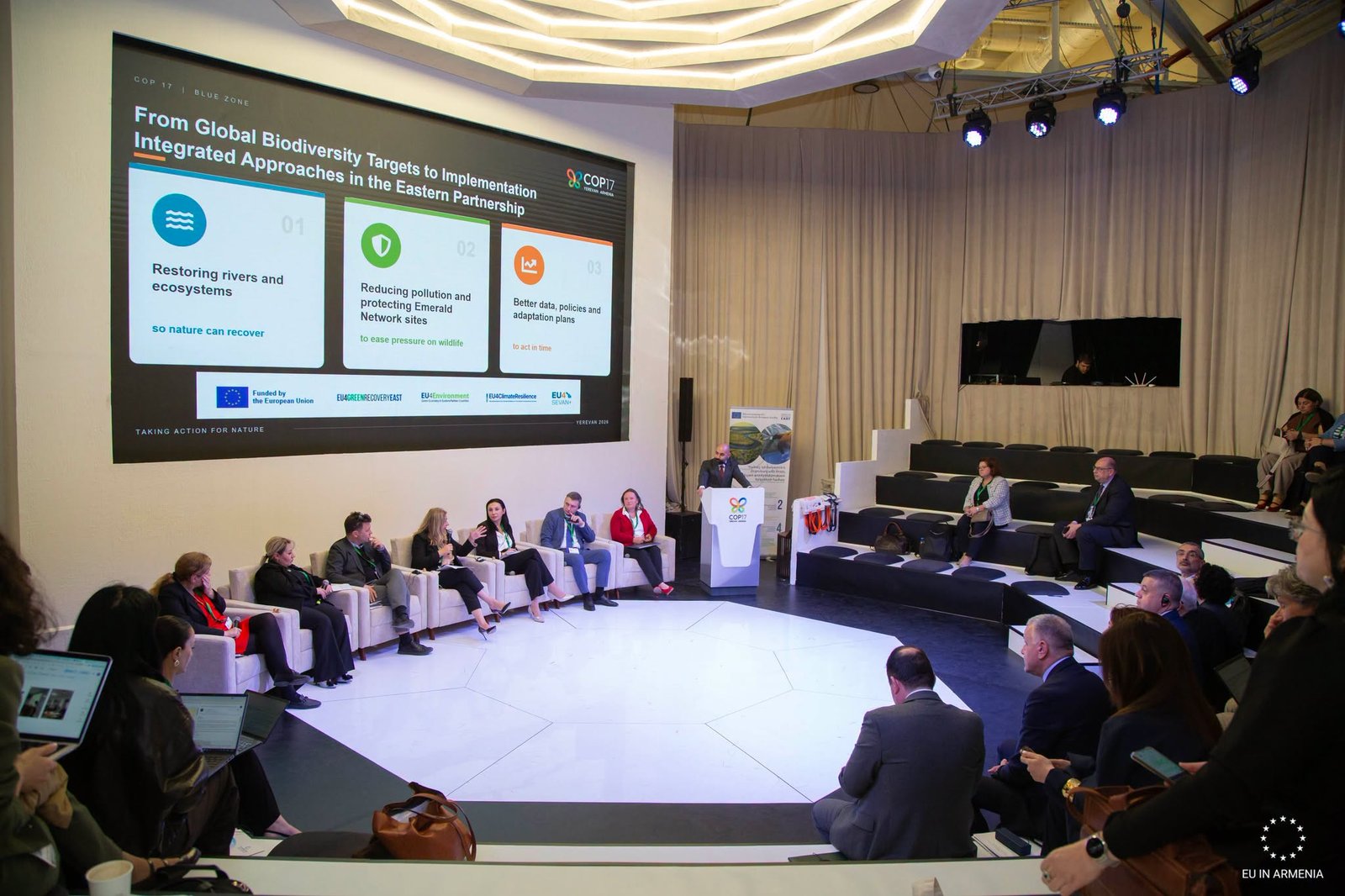
EU4ClimateResilience Joins COP17 Discussion on Biodiversity Protection and Climate Adaptation
On 28 October, the EU4ClimateResilience project joined EU4Green Recovery East, EU4Environment and EU4Sevan+ for a side event at the Armenian Pavilion during COP17 in Yerevan, exploring how global biodiversity targets can be translated into concrete action across Eastern Partnership countries. Jointly organised by the participating projects, the event brought together representatives from Armeni
Implementing Partners:
Deutsche Gesellschaft für Internationale Zusammenarbeit (GIZ) GmbH and the Organisation for Economic Cooperation and Development (OECD)